
Personal training scheduling software platform for booking classes

Best personal training scheduling software matters more now because fitness businesses are dealing with more members, more formats, and higher expectations around booking. In the US, fitness facility engagement is at a record high, with 81 million Americans belonging to a gym, studio, or fitness facility in 2025. That means personal trainers, studios, and gyms need scheduling tools that can handle 1:1 sessions, recurring appointments, group training, payments, reminders, waitlists, and clean mobile booking. I looked at tools that are widely used for fitness operations, including Mindbody, ABC Glofox, WellnessLiving, Zen Planner, Vagaro, and Pike13. This guide compares each platform for booking classes based on the real things that matter: ease of booking, class management, trainer calendars, client experience, and day-to-day admin. Service teams evaluating best appointment scheduling software for small business often benchmark operational complexity using scheduling software small business.
The best personal training scheduling software for booking classes should support class calendars, trainer availability, client self-booking, payments, packages, and reminders.
Mindbody is a strong choice for established fitness studios that need scheduling, payments, memberships, and marketplace visibility.
ABC Glofox and WellnessLiving work well for gyms and training studios that manage classes, memberships, staff, and client apps.
Zen Planner is useful for fitness businesses that need class booking, member management, attendance tracking, and billing in one place.
Vagaro and Pike13 are simpler options for personal trainers, small studios, and wellness businesses that want easy scheduling, payments, and client management.
If you are still comparing tools, this Medium article on best appointment booking software pairs well with this guide on what are the best appointment scheduling software solutions?.
Lunacal
Lunacal is a strong pick for a personal training scheduling software platform for booking classes because it covers the full client flow, from discovery to booking to payment.
It has the features personal trainers and fitness studios usually need, like class bookings, paid sessions, packages, reminders, calendar sync, intake questions, GDPR settings, and branded booking pages.
Pricing is reasonable, and with a 4.9/5 rating on G2, it is one of the highest rated scheduling tools in the market.
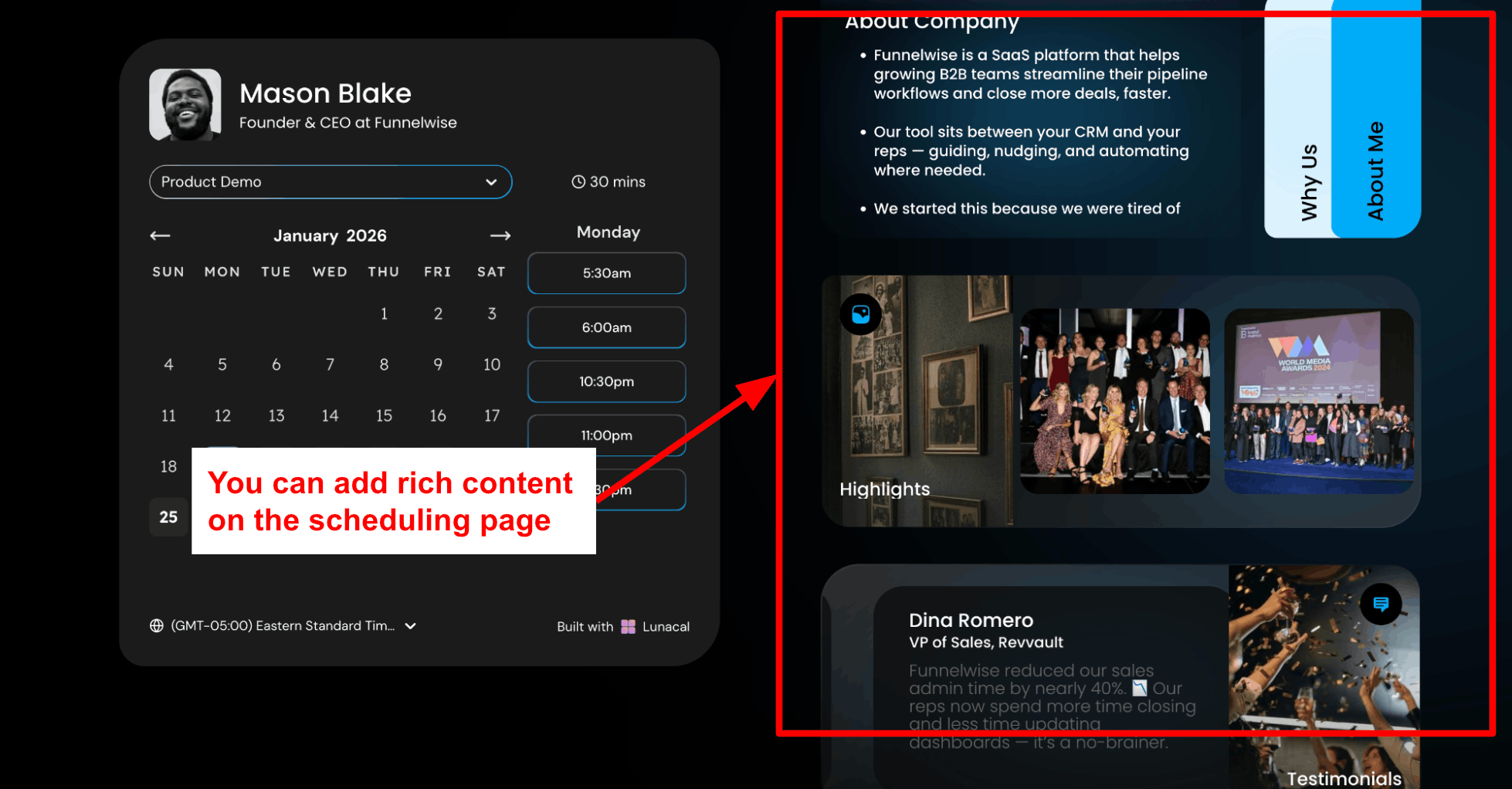
1. Beautiful scheduling pages with rich content
This is useful for personal trainers because people often want to know your training style before they book. You can add your transformation photos, class details, testimonials, intro video, fitness philosophy, and FAQs next to the calendar.
For example, if someone is booking a strength training class, they can see who it is for, what to bring, and what level of fitness is expected before choosing a slot. I took this screenshot:
2. Weekly availability with date exceptions
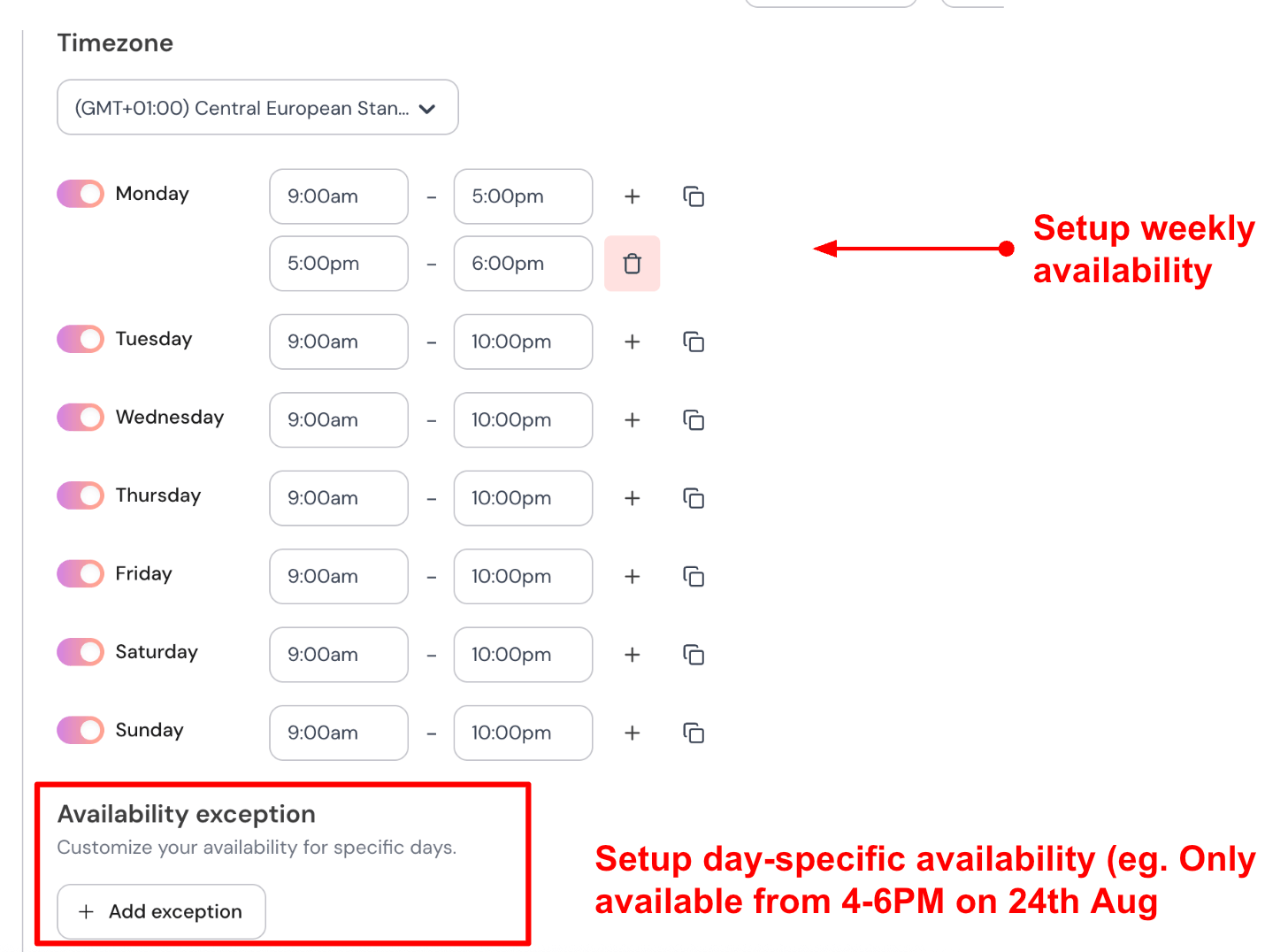
Personal trainers usually have different hours for private sessions, group classes, gym floor time, and rest days. Lunacal lets you set weekly availability and block specific dates when you are unavailable.
This helps when you are running early morning HIIT classes on weekdays and weekend mobility sessions separately. Here’s how it looks:
3. Team scheduling flow
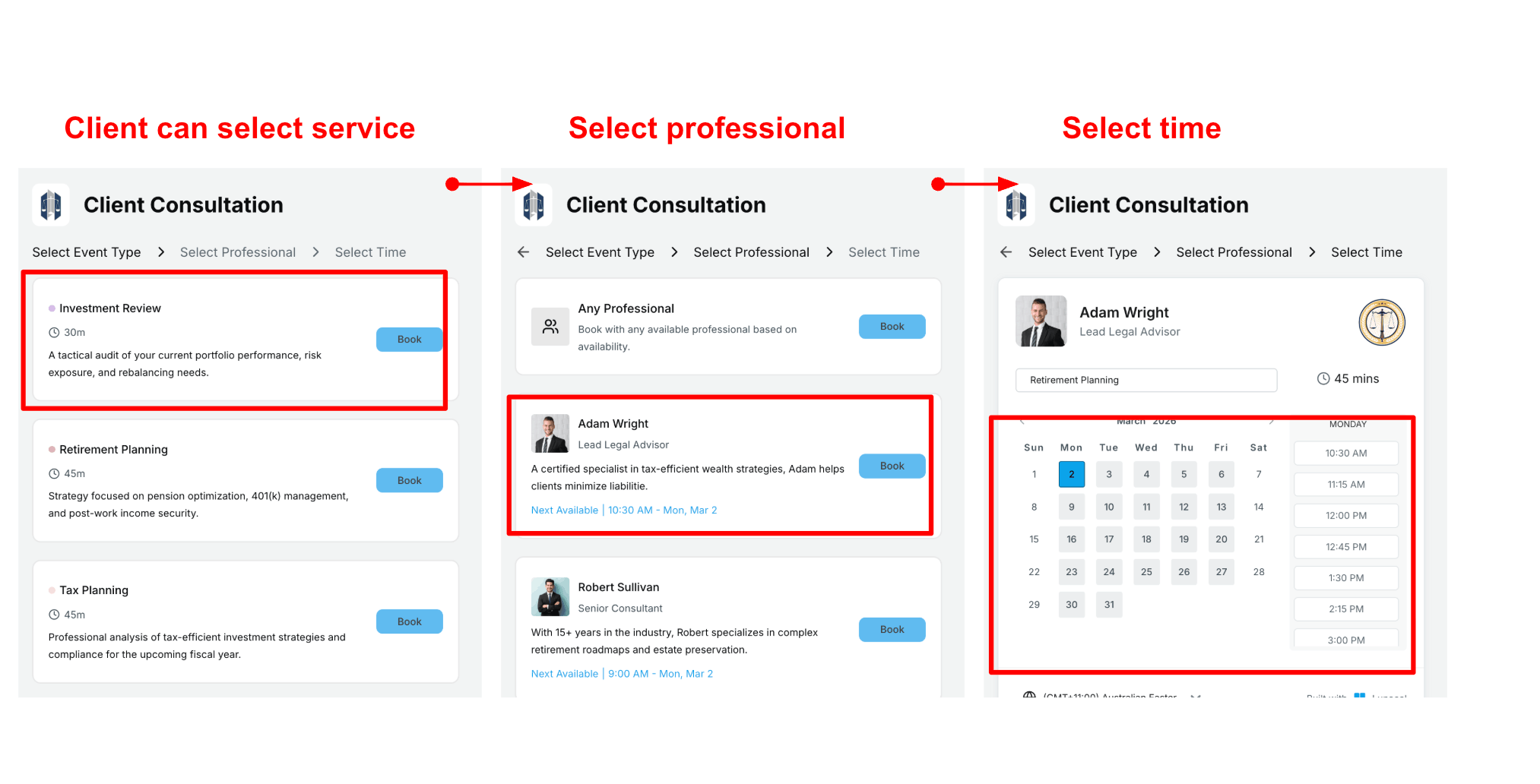
This is helpful if your fitness business has multiple trainers or instructors. Clients can choose the class type, pick a trainer, and then select a time that works.
For example, a client can choose personal training, yoga conditioning, or group strength class, then book with the right coach. Here’s a screenshot from the tool:
4. Paid sessions
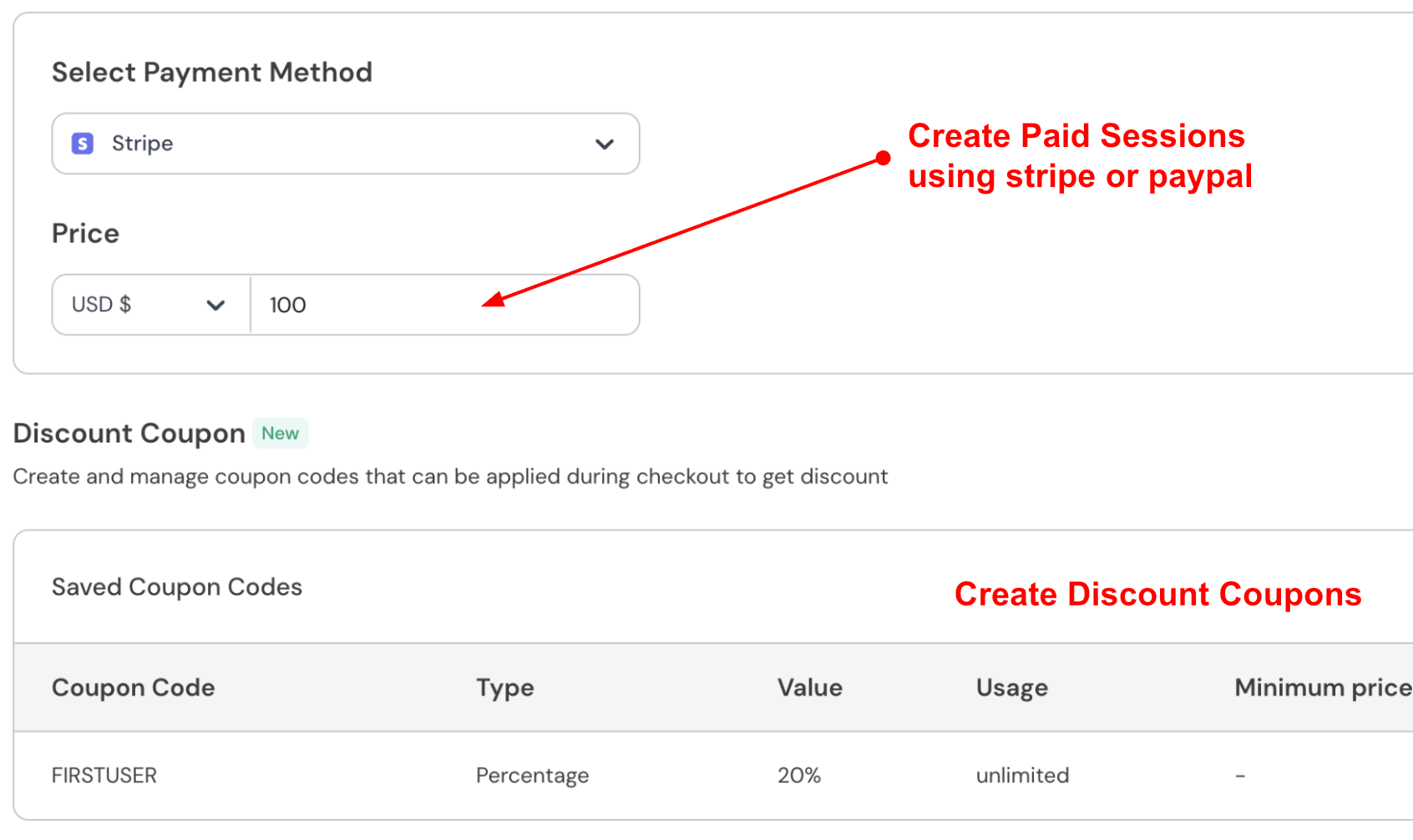
Lunacal lets you collect payments during booking through Stripe or PayPal. This is very useful for personal training sessions, paid trial classes, fitness consultations, and workshop bookings.
I recommend this because prepaid bookings reduce no shows and make the class booking process cleaner for both the trainer and the client. Screenshot below:
5. Group Sessions
Group sessions are important for any platform for booking classes. Lunacal lets multiple people book the same slot, which works well for bootcamps, strength classes, pilates sessions, mobility workshops, and small group training.
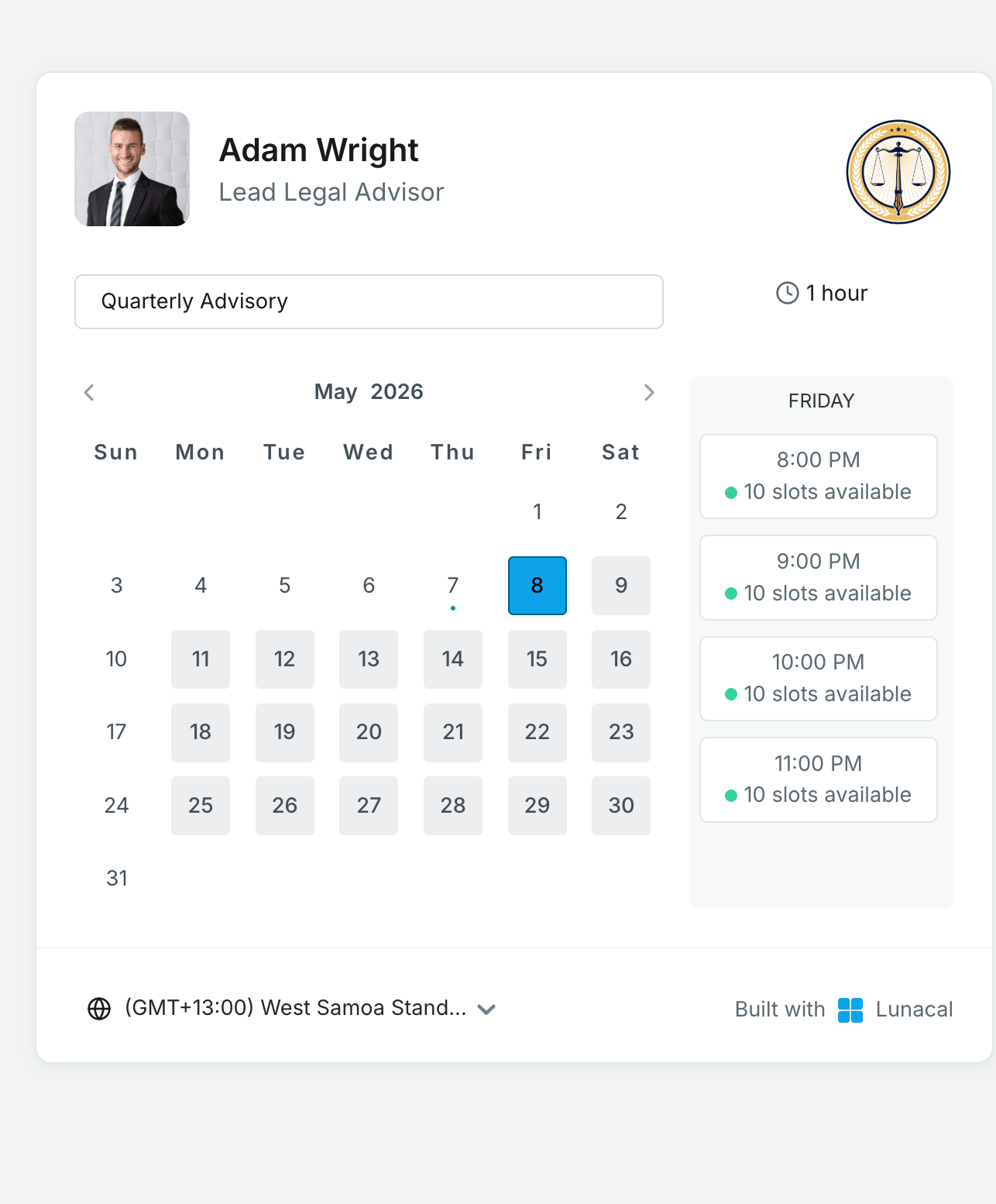
This keeps your calendar simple while still letting you fill one class with multiple clients. This is the screenshot to use:
Mindbody
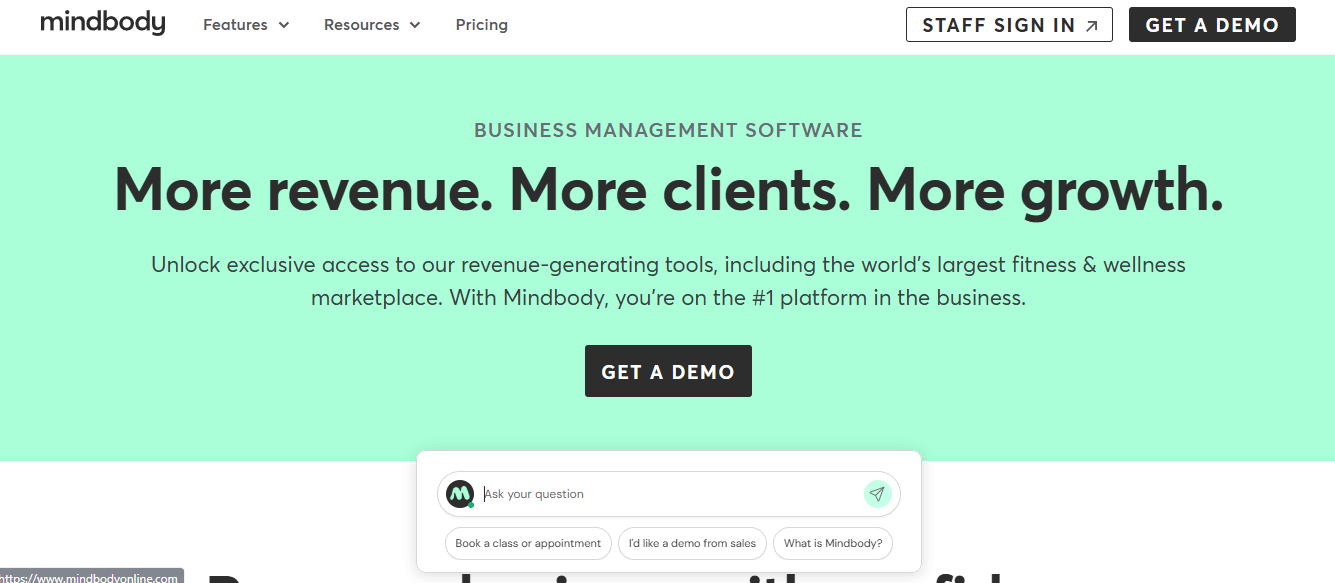
Mindbody is best known as a full business management platform for fitness studios, gyms, wellness centers, and class-based businesses.
Use it when scheduling is only one part of the job and you also need payments, staff management, client records, reminders, marketing, and reporting in one system.
For wellness and coaching workflows, HIPAA compliant appointment scheduling for coaches can be a more practical fit.
Features
Client Notes
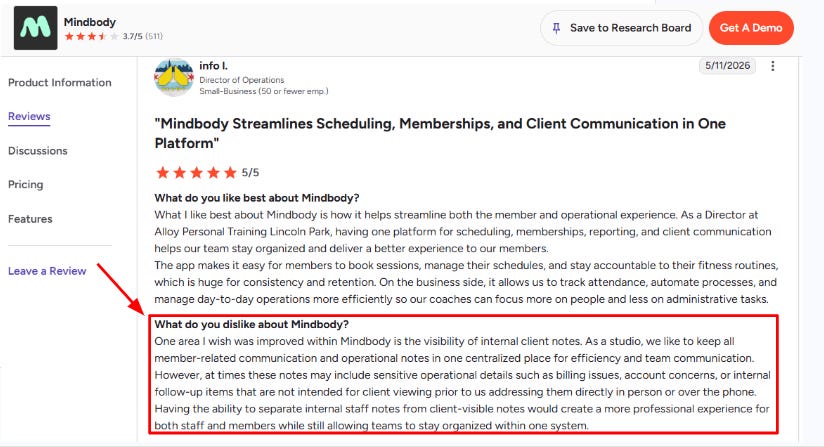
Mindbody gives studios a central place to track client details, visit history, preferences, memberships, and staff-facing context. When I tested this flow, it felt useful for front-desk teams and trainers who need a quick client snapshot before a session.
The part that needs care is note visibility. I saw the same concern in a G2 review around internal client notes being too easy to mix with client-facing information. I’d place that screenshot right below this point because it explains the real studio risk better than a generic feature list.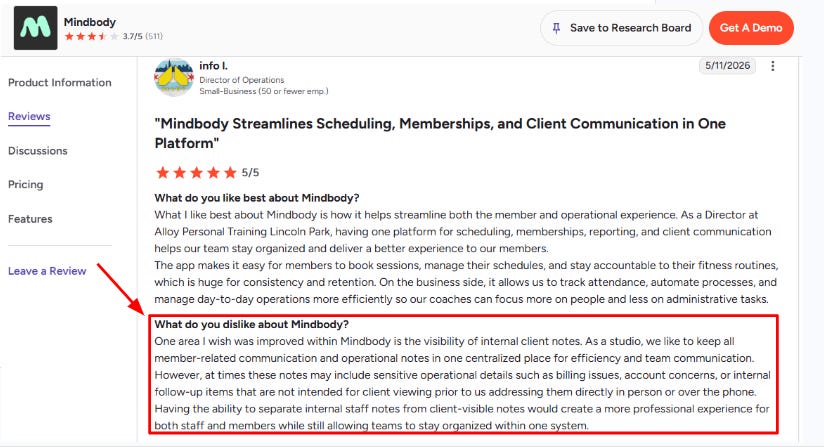
Payment Integration
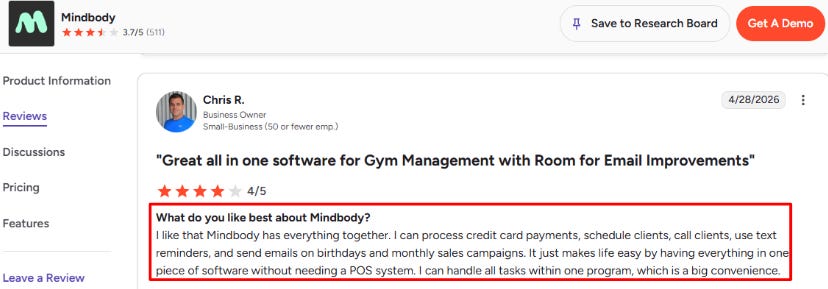
Mindbody supports card payments, memberships, service sales, and POS-style transactions inside the same system. In testing, this is where the product feels strongest for studios that sell classes, personal training sessions, packages, and retail items from one place.
That also matches the second G2 review you shared. The reviewer liked having credit card payments, scheduling, calls, text reminders, birthday emails, and sales campaigns in one program. The screenshot can go under this point because it shows why some studios prefer an all-in-one setup.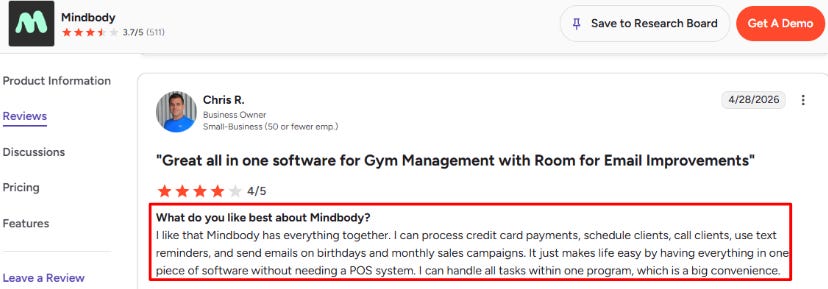
Class Scheduling
Mindbody handles appointments, classes, courses, waitlists, cancellations, confirmations, and no-show rules. I found the setup more detailed than a simple booking link tool, which is useful if you run group sessions with different rules for each class type.
It also supports notice periods, buffer times, late cancellation fees, and automated reminders, so studios can protect capacity without manually chasing every booking.Staff Availability
Mindbody lets staff update their schedule, manage availability, check clients in, and work from mobile devices. This matters for personal training studios where trainers may run different hours, rooms, services, and locations.
One thing that felt slightly heavy during setup is the number of settings. It gives control, but smaller teams may need time to map everything properly before going live.Marketplace Discovery
Mindbody also gives businesses a listing inside the Mindbody app, which can help people discover and book fitness and wellness services. That is a useful layer for studios that want bookings from outside their own website.
A point many basic reviews skip is Mindbody’s wider position in the fitness booking market. Reuters reported in January 2026 that Playlist’s brands include Mindbody, Booker, and ClassPass, and that the combined Playlist-EGYM entity was valued at $7.5 billion. That explains why Mindbody feels closer to a studio operating system than a basic scheduling tool.
Pros
Mindbody works well for studios that want scheduling, payments, client records, reminders, marketing, and reporting in one place.
That makes it useful for fitness businesses with repeat clients, memberships, and front-desk operations.It supports class bookings, private sessions, courses, waitlists, cancellation rules, and automated confirmations.
Payment tools are built into the system, including POS-style selling for services, memberships, and products.
Staff can manage schedules, check-ins, client profiles, and daily operations from the Business App.
The Mindbody app listing can add a discovery channel for studios that want more local visibility.
Cons
Mindbody may be too much if you only need personal training scheduling software for simple class bookings, availability, reminders, and payments.
Solo trainers and small teams may find a lighter booking-class platform easier to set up and maintain.Pricing can rise once you need higher tiers, marketing tools, branded apps, SMS, onboarding, or add-ons.
The setup has many moving parts, so it can take time to configure services, staff, rooms, policies, and payment flows.
Internal notes and client-visible information need careful handling, especially for teams storing sensitive operational comments.
Some advanced features are tied to higher software levels or add-ons, so the base plan may feel limited for growing studios.
Pricing
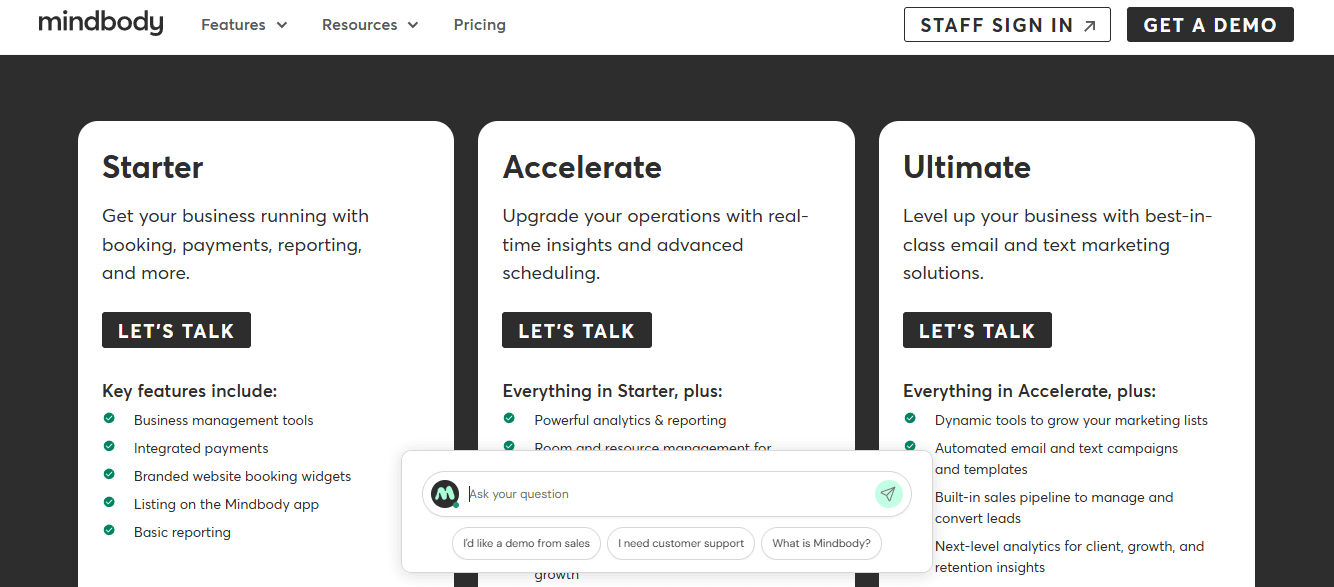
Mindbody pricing starts at $99 per month per location for the Starter plan. It includes booking, payments, reporting, branded website booking widgets, and listing on the Mindbody app.
Accelerate adds advanced scheduling, resource management, promo codes, and deeper reporting.
Ultimate adds email and text marketing, lead management, retention insights, and higher messaging limits.
When to Choose Mindbody
Choose Mindbody if you run a fitness studio, personal training business, gym, pilates studio, yoga studio, or wellness center with classes, memberships, payments, staff, and repeat clients.
It makes the most sense when you want one system for operations, bookings, payments, reminders, reporting, and marketing.
Skip it if you only need a clean booking page for personal training classes and want something fast, lightweight, and easier to manage.
Teams accepting deposits frequently compare which booking systems support online payments? at booking software with payment.
WellnessLiving
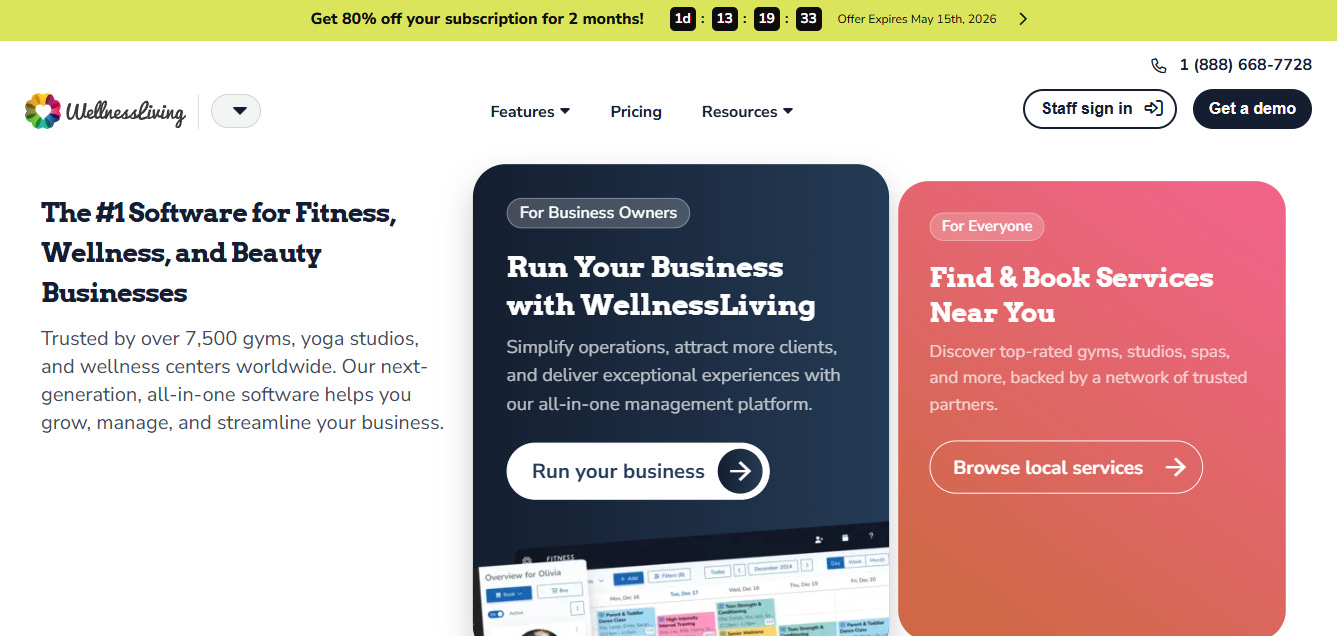
WellnessLiving is best known as an all-in-one business platform for fitness, wellness, Pilates, yoga, dance, and personal training studios. It makes the most sense when class booking, memberships, payments, staff access, client apps, and marketing need to sit inside one system.
Features
Class Scheduling
WellnessLiving handles classes, appointments, events, waitlists, cancellations, and recurring booking rules. When I tested the setup flow, the depth was useful, but the first pass took more time than a simple booking tool because there are many settings sitting behind each service.
I saw a similar point in the G2 review you shared. The reviewer said the platform took time to understand at the start, so I’d place that screenshot right below this feature section.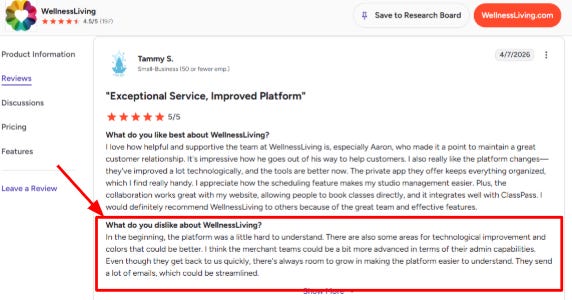
Payment Integration
This is one of the stronger parts of WellnessLiving for studios that sell more than single sessions. You can set up casual passes, class packs, memberships, courses, POS payments, saved cards, recurring billing, and client purchases through the app or web portal.
The second G2 review you shared fits here well. The reviewer liked how easy scheduling and prepayments felt for a Dance and Pilates studio, especially with casual, concession card, membership, and course purchases. The screenshot can sit right after this point because it supports the real studio use case.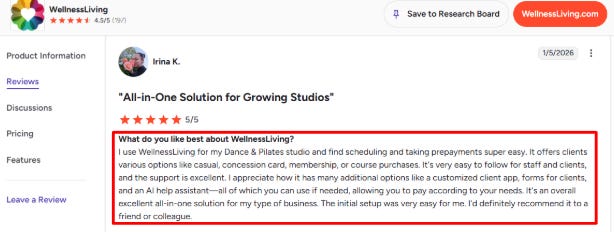
Client Apps
WellnessLiving includes the Achieve client app and Elevate staff app. Clients can book, buy passes, manage profiles, receive notifications, and use rewards, while staff can book clients, update availability, sell passes, and manage schedules from mobile.Membership Tools
The platform is built for businesses that depend on repeat attendance. Memberships, rewards, reminders, recurring billing, overdue payment handling, and client records all connect back to the class schedule. The Health & Fitness Association reported 66.4% annual member retention in its 2025 benchmark, which makes retention workflows more important than basic booking screens for fitness studios.Booking Channels
WellnessLiving supports website widgets, client portals, Google booking, ClassPass, Wellhub, FitReserve, Zoom, QuickBooks, and other integrations. The Google booking connection is especially useful for local studios because services can appear bookable from search and maps.
Pros
Strong for studios that sell classes, packs, memberships, courses, and prepaid sessions from the same system. It feels more complete for a growing studio than a basic appointment scheduler.
Good fit for personal training studios that also run group classes, workshops, or hybrid fitness programs.
The client app, staff app, web portal, and POS give the business a more connected setup.
Waitlists, cancellations, passes, and membership rules are handled with solid control.
The built-in marketing, rewards, lead management, and AI tools give studios more ways to bring clients back.
Cons
I would skip WellnessLiving for a solo personal trainer who only needs a clean booking page, simple availability, and payments for 1:1 sessions. The setup can feel heavier than the job requires.
The dashboard has a learning curve because many business rules are packed into the system.
Some admin areas can feel busy during setup, especially around payments, memberships, and notifications.
Pricing rises quickly once you move beyond the Starter plan.
The best value appears when you use many modules, so small teams may pay for features they rarely touch.
Pricing
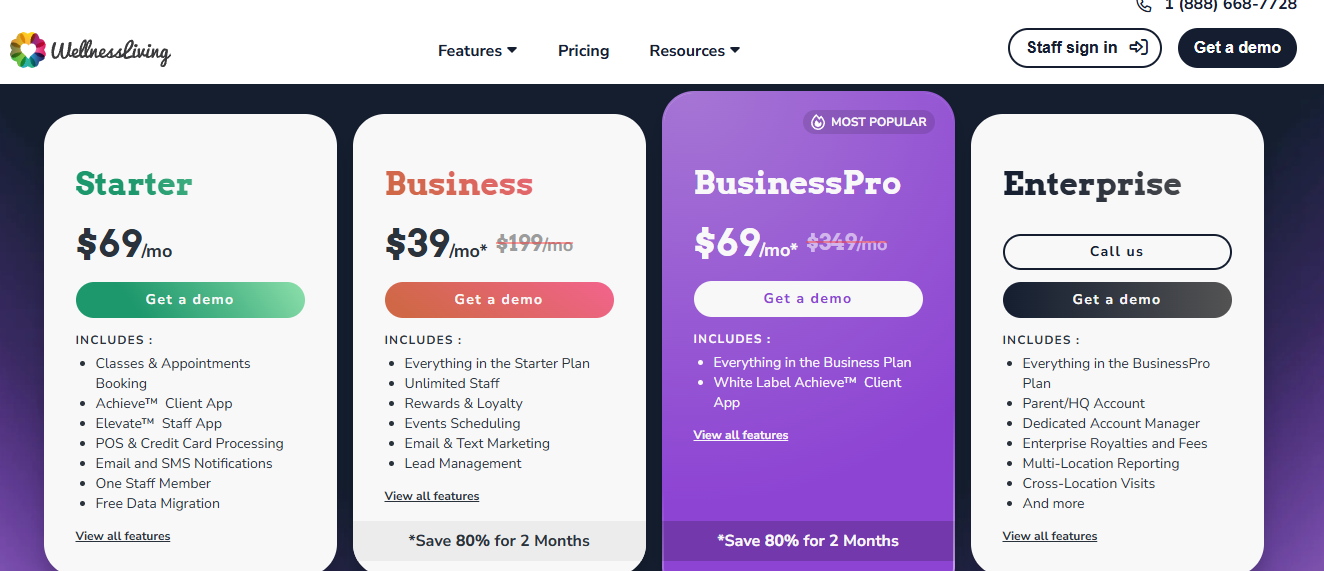
WellnessLiving lists Starter at $69/month, Business at $199/month, and BusinessPro at $349/month on monthly billing. Annual billing reduces these to $62/month, $179/month, and $314/month. Enterprise is quote-based.
Promotional pricing may appear for Business and BusinessPro, so the listed monthly price and short-term offer price can differ.
When to Choose WellnessLiving
Choose WellnessLiving if you run a personal training studio, Pilates studio, dance studio, gym, or wellness business with classes, memberships, prepaid packs, staff, and recurring payments.
It is a better fit when booking is tied to revenue, retention, client management, and repeat attendance.
Avoid it if you are a solo trainer who mainly needs a lightweight booking link, basic calendar sync, and simple online payments.
Businesses that collect deposits should also review booking software with payment.
Glofox
Glofox is best known as gym and boutique studio management software with strong class scheduling, member management, branded app, payments, and front-desk tools. It makes the most sense when a personal training business runs more like a gym, with memberships, classes, check-ins, staff, and recurring clients.
Features
Class Scheduling
Glofox handles group classes, appointment-style sessions, waitlists, trainer schedules, and member bookings from one system. When I tested the flow, it felt built for studios where classes change often and front-desk staff need a clean view of the day.
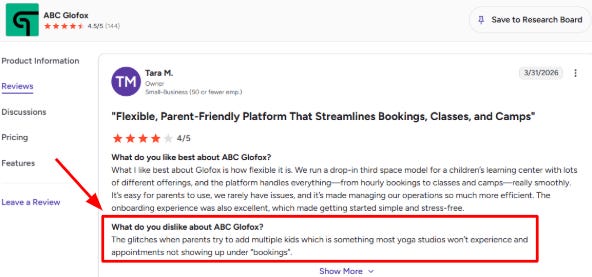
One thing I’d watch closely is family or multi-child booking. The G2 review screenshot below mentions glitches when parents add multiple kids and appointments sometimes do not show under bookings. That sounds like a small edge case until you run kids’ fitness, youth training, dance, martial arts, or family programs.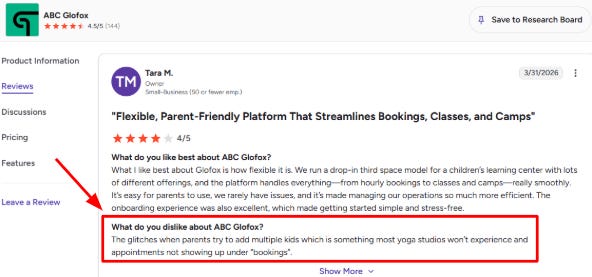
Member App
The branded app is one of the stronger parts of Glofox. Members can book classes, manage memberships, check schedules, and interact with the studio without calling the front desk every time.
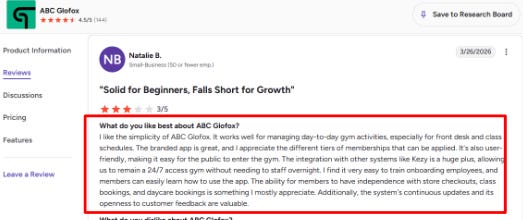
The second G2 review you’re adding below matches what I noticed in the product direction. It praises the app, front-desk use, membership tiers, staff training, and member independence. I agree with that for gyms where members book often and need self-service.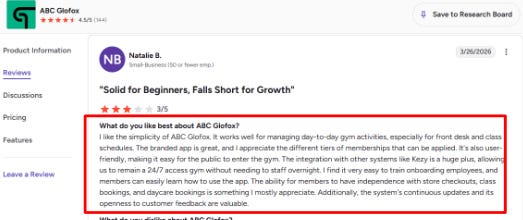
Membership Management
Glofox supports different membership types, recurring plans, drop-ins, packages, and member profiles. This matters for personal training studios that sell monthly plans, class packs, open gym access, or hybrid training programs.
It felt more useful when the business had structured offers. For a solo trainer selling simple 1:1 sessions, a lighter scheduling tool may feel easier.Payment Integration
You can use Glofox to collect payments, manage billing, sell memberships, and support paid bookings. That makes it useful when scheduling and revenue need to stay connected.
The setup has more moving parts than a simple booking link. In my experience, that is fine for studios with memberships, but it can feel heavy if you only want people to book and pay for a few training sessions.Gym Operations
Glofox also covers check-ins, reporting, staff access, front-desk workflows, and integrations with access-control systems. ABC Fitness positions Glofox as part of its broader fitness software suite, and its acquisition release said Glofox helped ABC serve personal trainers, yoga studios, boutique gyms, and commercial clubs worldwide.
That detail matters because Glofox is built around the full operating system of a fitness business. Basic reviews often miss that it is more studio-management software than a plain scheduling app.
Pros
Good fit for gyms and studios that need class bookings, memberships, payments, and member management in one place.
It works especially well when front-desk staff, trainers, and members all use the system daily.The branded app gives members a familiar place to book classes, manage plans, and check schedules.
Membership tiers and recurring billing make it useful for gyms with structured plans.
Staff onboarding seems easier than many older gym systems, based on the G2 review you shared.
Works well for businesses that need operational tools like check-ins, reporting, and access-related integrations.
Cons
Skip Glofox if you mainly need a simple personal training scheduling software platform for booking classes, 1:1 sessions, and paid appointments.
A lighter tool will usually be faster to set up and easier for a small coaching team.Multi-child or family booking flows may need careful testing before rollout.
Some appointment visibility issues have been reported in the G2 review you shared.
Pricing is quote-based, so it is harder to compare quickly against simpler booking tools.
It can feel too broad for solo trainers who do not need memberships, front-desk tools, or access workflows.
Pricing
ABC Glofox does not show fixed public pricing on its main pricing page. It asks businesses to request a quote based on their setup, size, and growth needs.
Its plans page mentions transparent pricing, minimal upfront costs, flexible contracts, and custom enterprise options for multi-location or franchise operations.
Budget extra time for a sales call before you can compare it properly.
When to Choose Glofox
Choose Glofox if you run a gym, boutique fitness studio, martial arts school, yoga studio, or personal training business with memberships, class packs, staff schedules, payments, check-ins, and a branded member app.
It may be too much if you only need a clean booking page, calendar availability, intake questions, paid sessions, and simple class bookings. For that use case, a focused scheduling tool will usually feel quicker and easier.
Zen Planner
Zen Planner is best known as a gym and fitness studio management tool with class scheduling built deeply into the system.
Use it if your personal training business needs bookings, member records, attendance, billing, and staff workflows in one place.
Features
Class Scheduling
Zen Planner handles recurring classes, appointments, waitlists, attendance, and capacity limits in a way that feels built for studios. When I tested it, the flow made more sense for gyms running multiple sessions every week than for a solo trainer with a simple calendar.Member Management
The system keeps client profiles, memberships, attendance history, payments, and communication tied together. This is useful when someone buys a package, attends group classes, pauses membership, or needs follow-up from the front desk.Payment Integration
Zen Planner supports payments, recurring billing, memberships, and package-style purchases. That matters for personal training studios because many bookings are connected to monthly plans, class packs, or ongoing coaching rather than one-off paid calls.Availability Setup
You can control staff schedules, appointment availability, session types, and booking rules. I found it powerful, although the setup can feel heavier than expected if you only want a clean booking page for a few training slots.Reporting Tools
Zen Planner gives reports around attendance, payments, memberships, and business activity. One point that basic reviews often skip is how important retention is in fitness. The IHRSA retention research explains why tracking member activity matters, and that context makes Zen Planner’s reporting feel more relevant.
Pros
Strong fit for fitness businesses that run classes, memberships, and recurring client relationships.
It feels designed around the daily operations of gyms and training studios.Handles class schedules, staff, attendance, and payments from the same system.
Good for businesses where clients buy memberships or class packs instead of booking single sessions.
Reporting is useful for tracking participation, revenue, and member activity.
Works better when there is a front desk, admin, or operations person managing the setup.
Cons
If you mainly need a branded booking page that converts visitors into calls, Zen Planner may feel too operational for a best personal training scheduling software setup.
In that scenario, a lighter scheduling-first tool can be easier to launch and manage.The interface can take time to understand during the first setup.
It may feel too heavy for independent trainers with only 1:1 sessions.
Pricing is less straightforward than tools with public self-serve plans.
Some parts feel built for gym operations, so simple appointment booking can take extra steps.
Pricing
Zen Planner usually follows a quote-based pricing model, so the exact cost depends on the business size, setup, and features needed.
From what I found during research, it is usually positioned for studios, gyms, martial arts schools, and fitness businesses that need more than basic scheduling.
The total cost can include membership management, billing, staff tools, reporting, and onboarding support depending on the plan.
It may be harder to compare quickly against simple booking tools because the pricing is not always shown as a clean monthly plan on the public website.
I would check the final quote carefully if you only need booking classes, payment collection, and reminders. The value makes more sense when you use the wider studio management features.
When to Choose Zen Planner
Choose Zen Planner if you run a personal training studio, gym, martial arts school, or fitness business with classes, memberships, and repeat clients.
It works well when booking is only one part of the operation, and you also need billing, attendance, staff schedules, and member records.
It is a good fit if your team wants to track who attended, who missed sessions, who paid, and who needs follow-up.
It makes sense for businesses moving away from spreadsheets, manual attendance, and separate payment tools.
I would choose it when the business is already complex enough to need an operating system for fitness management, not only a calendar link.
Vagaro
Vagaro is best known as an all-in-one booking and business management tool for salons, spas, wellness businesses, and fitness studios. For personal trainers and class-based studios, it makes sense when you want scheduling, payments, memberships, client records, and front-desk operations in one place.
Features
Class Scheduling
Vagaro lets trainers and studios create bookable classes, manage client sign-ups, and keep the schedule visible online. When I tested the setup flow, it felt more built for a real studio schedule than a simple solo calendar link.
It works well if you run group classes, private sessions, workshops, or a mix of all three. The extra business settings take more time to configure, though, especially if you only need a clean booking page.Client Profiles
The client records are useful if you want more than a name, email, and booking history. You can keep notes, track visits, view past purchases, and connect the booking flow with the customer’s broader relationship with the business.
For personal training, this matters when clients buy packs, attend classes, skip sessions, or move between different trainers. I liked the depth here, although the interface can feel dense during the first setup.Payment Integration
Vagaro has built-in payment processing, card storage, no-show protection, deposits, and checkout flows. That makes it helpful for trainers who want clients to pay while booking or keep a card on file for cancellations.
One detail I would not miss is how deeply payments sit inside the product. Adyen’s case study says Vagaro uses Adyen CashOut for instant payouts to beauty, spa, and wellness professionals, which explains why payouts and payment flow feel like a serious part of the product, rather than a small add-on.Memberships Packages
Vagaro supports class packs, memberships, recurring billing, and package-based usage. This is useful for personal trainers selling 5-session packs, monthly coaching memberships, or recurring group class access.
In testing, this felt stronger for studios with repeat customers than for trainers selling one-off calls. The value shows up when you need clients to buy, redeem, renew, and rebook without manual tracking.Calendar Management
The calendar supports appointments, classes, staff schedules, reminders, and schedule visibility across devices. Vagaro’s personal training page also highlights mobile scheduling for remote and in-person sessions, with automatic calendar updates across devices.
For a trainer managing different class types, rooms, instructors, or locations, this is useful. For a very small setup, the calendar has more controls than you may need on day one.
Pros
Strong fit for trainers and studios that want bookings, payments, memberships, and client records in one system. It feels closer to business management software than a simple scheduling tool.
Good for group classes, private sessions, packages, memberships, and recurring client relationships.
Built-in payments reduce the need to stitch together booking software and a separate checkout tool.
Useful client history and reporting for repeat customers, attendance, purchases, and revenue.
Marketplace visibility may help some local fitness businesses get discovered by new clients.
Cons
Vagaro may be too heavy if you mainly want a modern booking page that builds trust and converts visitors. In that case, a tool like Lunacal can feel easier for solo trainers, consultants, or small teams who care more about the booking page experience.
The setup has many business settings, so first-time configuration can take longer than expected.
Some useful features sit behind add-ons, so the final monthly cost can climb.
The design feels more functional than polished in a few areas.
It is better suited to fitness, wellness, and appointment-heavy businesses than general scheduling use cases.
Pricing
Vagaro’s US pricing starts at $23.99 per month for one calendar, based on its official pricing listing. Each additional employee calendar is $10 per month for up to seven licenses, and extra employees can be added after that without extra calendar charges.
Premium features are add-ons, so check the final cost if you need forms, marketing, extra storage, branded apps, or advanced business tools. Payment processing also has separate rates. Vagaro’s card processing page lists rates such as 1.90% per dip and tap, plus 2.20% for typed-in transactions in the region shown by the page.
When to Choose Vagaro
Choose Vagaro if you run a personal training studio, gym, wellness center, or class-based business where scheduling is tied to payments, memberships, packages, and repeat clients.
It is a strong option when your booking system also needs to handle checkout, customer records, packages, and front-desk workflows.
Skip it if you only need a lightweight calendar link, a highly branded booking page, or a simpler way to convert website visitors into booked sessions.
For service providers, scheduling software small business gives a more practical filter.
Pike13
Pike13 is best known for managing fitness studios, personal training businesses, and class-based service teams from one place. Use it when you need scheduling, client management, packages, payments, and staff workflows tied closely together.
Features
Class Scheduling
Pike13 handles recurring classes, private sessions, workshops, and staff-based schedules. When I tested the setup flow, it felt built for businesses that run many session types every week instead of a simple one-page booking link.Client Profiles
Each client can have booking history, purchases, notes, memberships, and attendance records in one place. This is useful for personal training studios where the relationship continues across multiple sessions, packages, and trainers.Payment Integration
Pike13 supports payments for classes, memberships, packages, and recurring plans. The useful part is how payments connect back to passes and attendance, so the front desk or trainer can quickly see what a client has already bought.Availability
You can set staff availability, services, locations, and booking rules. I liked the control, though the setup takes more patience than lighter tools because every trainer, service, and rule needs to be mapped properly.Attendance Tracking
Pike13 makes class check-ins and attendance history easy to manage. This matters more than it seems because the U.S. Bureau of Labor Statistics projects strong growth for fitness trainers and instructors, which means growing studios need cleaner systems for classes, staff, and client records.
Pros
Strong fit for class-heavy fitness businesses. It works well when bookings, staff schedules, memberships, attendance, and payments all need to stay connected.
Good for studios that sell packages, passes, and recurring memberships.
Client profiles feel useful for ongoing training relationships.
Staff scheduling is more detailed than basic booking tools.
Attendance tracking helps with day-to-day class operations.
Cons
Pike13 may be too much if you mainly need the best personal training scheduling software for simple 1:1 bookings, branded booking pages, and easier setup. In that case, Lunacal can feel faster and cleaner for solo trainers or small teams.
The setup can feel heavy when you are adding many services, staff rules, and packages.
The interface may feel less modern compared with newer scheduling tools.
It is better suited to fitness operations than broad service businesses.
Some users may need onboarding time before the system feels natural.
Pricing
Pike13 does not feel like a lightweight free booking tool. It is priced more like studio management software, so it makes sense when you are running classes, packages, memberships, and staff scheduling.
Pricing can vary based on business needs, plan level, and add-ons. I would check the latest Pike13 pricing page before making a final decision because fitness software pricing often changes with features and support.
For a solo personal trainer, the cost may feel high if you only need availability, payments, and a simple booking page.
For a growing studio, the pricing becomes easier to justify when it replaces separate tools for scheduling, payments, attendance, and client management.
The real comparison should be against full fitness studio platforms like Mindbody, ABC Glofox, WellnessLiving, Zen Planner, and Vagaro.
When to Choose Pike13
Choose Pike13 if you run a personal training studio, fitness class business, martial arts school, dance studio, or similar service business with repeat clients.
It makes sense when you sell passes, packages, memberships, and recurring sessions.
It is also a good fit when multiple staff members need their own schedules, services, and booking rules.
I would choose it when attendance tracking and client purchase history matter as much as the booking itself.
Skip the extra complexity if your main need is a simple booking page for personal training sessions, discovery calls, or paid 1:1 appointments.